
Introductions
Investigations in legal matters play a crucial role in the complex world of law. From gathering evidence to uncovering hidden details, these fact-finding missions are vital for the pursuit of justice. This article provides an insightful look into the importance of investigations and how they contribute to resolving legal disputes.
Before diving into the intricacies of investigations, it is essential to understand key terms. Investigations are systematic and thorough inquiries conducted to gather facts, evidence, and information relevant to a legal matter. Legal matters refer to any situation or dispute involving the application of laws or legal principles. Fact-finding is the process of gathering and analysing information to establish facts that will aid in decision-making and ultimately, in achieving a fair outcome.
The Purpose of Investigations in Legal Matters
Investigations serve several crucial purposes in legal matters. These purposes include gathering evidence, identifying relevant facts and parties, establishing credibility, and aiding in decision-making.
- Gathering evidence is the primary goal of any investigation. Evidence, whether physical, digital, or testimonial, helps build a solid case and supports the arguments presented by legal professionals. Without strong evidence, even the most just cause may falter in court.
- Identifying relevant facts and parties is another essential aspect of investigations. Legal matters often involve multiple individuals and entities, each with their unique roles and responsibilities. Investigations help determine who is involved, the extent of their involvement, and the facts that may be pertinent to the case.
- Establishing credibility is also an essential function of investigations. In legal matters, credibility can make or break a case. By verifying the information provided by parties, witnesses, and experts, investigations help ensure the authenticity and reliability of the evidence presented in court.
- Aiding in decision-making is crucial for investigations. Legal professionals must make critical decisions throughout a case, from determining whether to pursue a matter to negotiating settlements. Investigations provide the necessary information to make informed decisions, ultimately contributing to the pursuit of justice.
Types of Investigations
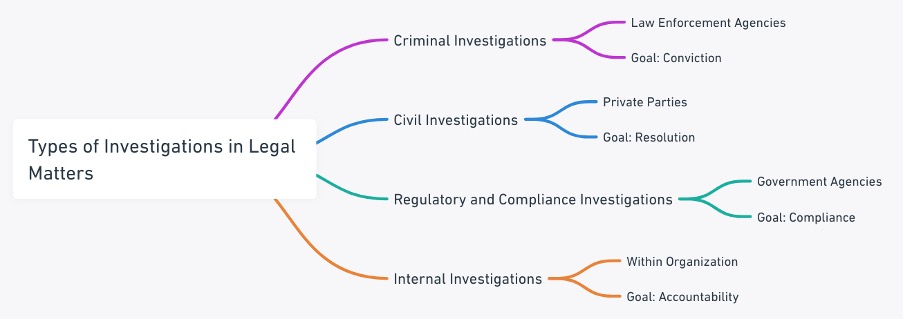
Investigations come in various forms, each serving a specific purpose within the legal framework. The four main types of investigations are criminal, civil, regulatory and compliance, and internal investigations.
The Investigation Process
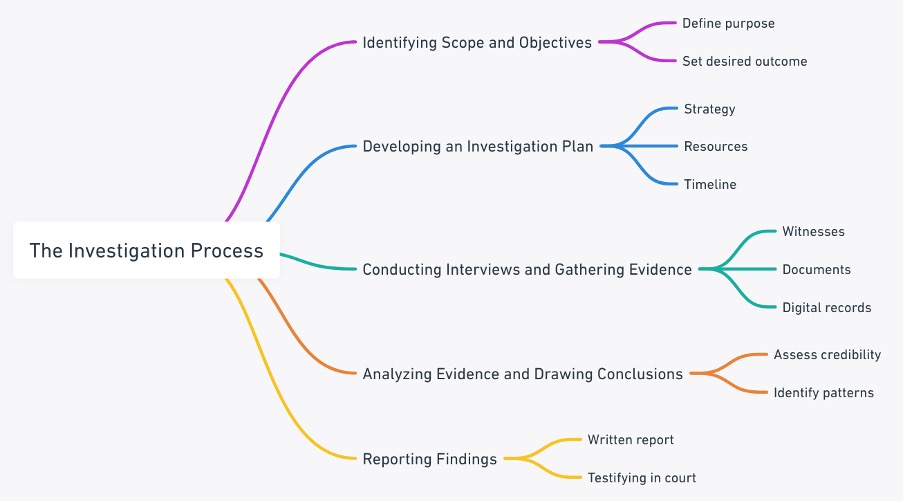
Conducting an investigation involves several steps, each critical to ensuring the accuracy and effectiveness of the process. These steps include identifying the scope and objectives, developing an investigation plan, conducting interviews and gathering evidence, analysing the evidence and drawing conclusions, and reporting the findings.
The Role of Investigators
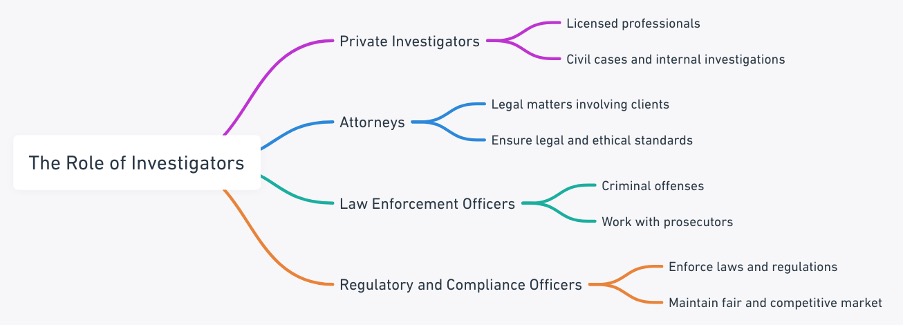
Investigations are conducted by various professionals, each with their unique skills and expertise. The primary roles of investigators include private investigators, attorneys, law enforcement officers, and regulatory and compliance officers.
The Importance of Fact-finding in Legal Matters
Fact-finding is a fundamental aspect of investigations in legal matters. Its importance cannot be overstated, as it directly contributes to ensuring fairness and justice, providing a solid foundation for legal arguments, and preventing and resolving disputes.
FAQs
When is an investigation necessary in a legal matter? An investigation is necessary when there is a need to gather evidence, establish facts, or verify information in a legal matter.
How long does an investigation take? The duration of an investigation varies depending on the complexity of the case, the amount of evidence to be collected, and the availability of relevant parties and resources.
What are the possible outcomes of an investigation? The possible outcomes of an investigation may include the identification of wrongdoing, the exoneration of accused parties, the resolution of disputes, or the implementation of corrective measures.
Can an investigation be conducted without legal representation? While it is possible to conduct an investigation without legal representation, it is generally not advisable.
What are the legal and ethical considerations during an investigation? Legal and ethical considerations during an investigation may include protecting the rights and privacy of individuals, preserving the integrity of the evidence, and ensuring that the investigation is conducted fairly and objectively.
Conclusion
In summary, investigations play a crucial role in legal matters. They provide the foundation for evidence, fact-finding, and decision-making that ultimately contribute to achieving fairness and justice. A thorough and effective investigation can mean the difference between success and failure in a legal dispute.
The importance of accurate fact-finding cannot be overstated, as it directly impacts the pursuit of justice. Ensuring that investigations are conducted professionally and ethically is essential to maintaining the integrity of the legal process.
It is highly advisable for clients to seek professional legal assistance when faced with complex legal matters. At Buang Jones Attorneys Inc., our commitment to providing cost-effective legal advice and being accessible to clients ensures that you receive the expertise and guidance necessary to navigate the intricacies of investigations in legal matters. Trust our team to deliver excellent legal services tailored to your needs, and experience the benefits of working with dedicated professionals.
Internal Links:
- News & Insights: This section likely contains articles, updates, and insights related to the firm’s legal practice and areas of expertise.
- Buang Jones Attorneys Inc. Contact Page
- Legal Services Offered by Buang Jones Attorneys Inc.
Description:
Buang Jones Attorneys Inc. is a modern law firm committed to setting the standard for excellence in legal skills and client service. They are actively involved in advancing and defending human rights issues in various legal settings, including courts, administrative law hearings, tribunals, and labor grievance procedures. The firm offers services in criminal or civil litigation, dispute resolution, fact-finding and investigative services concerning human rights, data protection and privacy laws, and representation and advice to government departments and entities.
The firm’s core values include Quality, Passion, Performance, and Timeliness, and they are located at 1st Floor, Block B & Block C, Metropolitan Park Parktown, Johannesburg, 2196, South Africa.
External Links (South African context):
- South African Police Service – Criminal Investigations: Information about criminal investigations conducted by the South African Police Service.
- Law Society of South Africa – Finding an Attorney: A platform to find attorneys and legal professionals in South Africa.
- Companies and Intellectual Property Commission – Regulatory Compliance: Information about regulatory compliance for companies and intellectual property in South Africa.